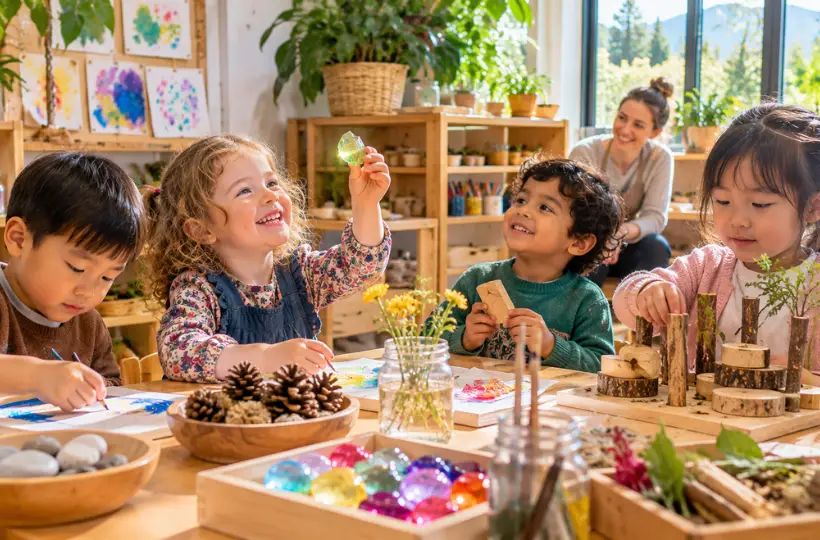
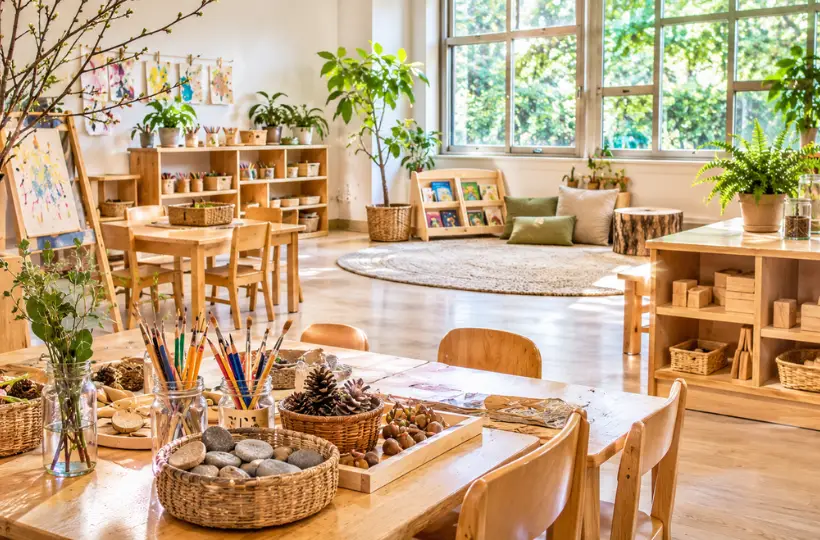
Walk into a Reggio Emilia-inspired classroom, and you might immediately notice something different. Instead of walls decorated with identical crafts and shelves overflowing with plastic toys, you may find natural materials, children’s artwork, cosy reading corners, and inviting spaces where little discoveries happen every day.
Everything has a purpose, but not everything has a predetermined use.
A
Reggio Emilia classroom is designed to inspire children to ask questions, explore their surroundings, and express themselves in different ways.
For parents exploring preschool and childcare options in North Vancouver, understanding this type of learning environment can help you see what makes a classroom more than simply a place to play.
What Makes a Reggio Emilia Classroom Different?
Think about the way your child explores a new place. They might notice an interesting object, investigate an unfamiliar sound, or become fascinated by sunlight coming through a window.
A Reggio Emilia classroom environment welcomes this natural curiosity.
Rather than organizing the classroom entirely around adult-directed activities, educators create spaces that invite children to explore materials, follow their interests, and develop their own ideas.
The philosophy recognizes that learning happens through relationships, experiences, and interactions with the surrounding environment.
You can discover more about these principles in our comprehensive guide to the
Reggio Emilia approach.
Why Is the Environment Called the Third Teacher?
In Reggio Emilia education, the environment is often described as the third teacher, alongside adults and other children.
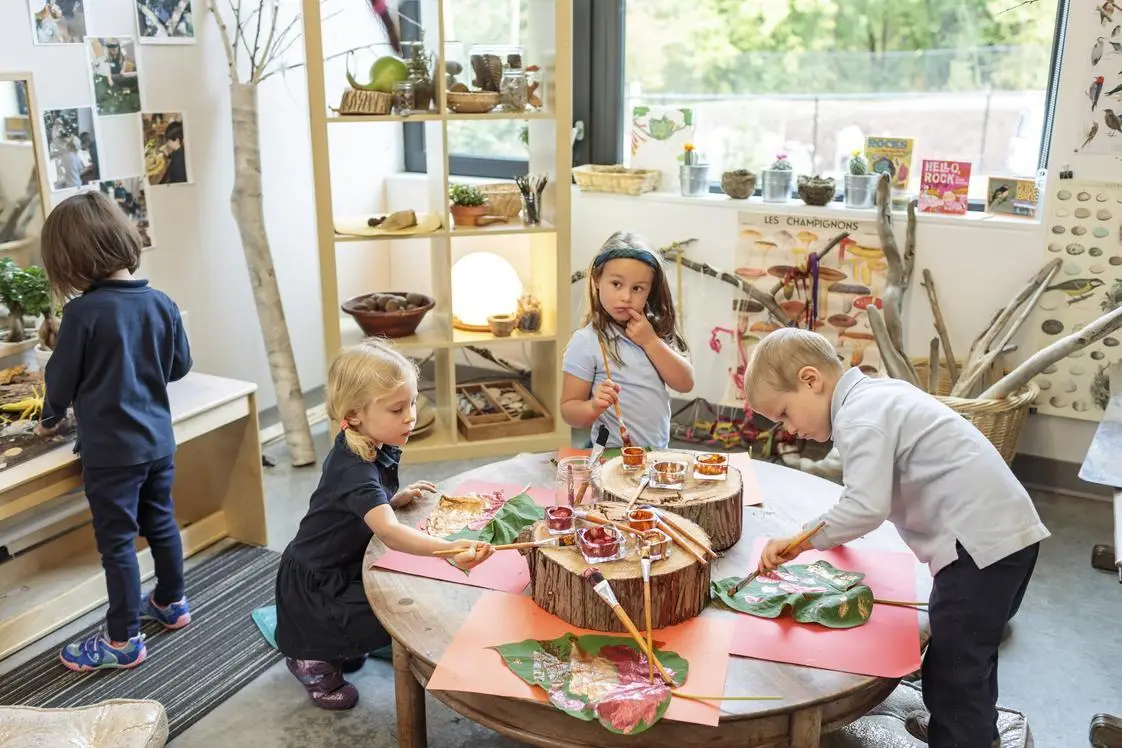
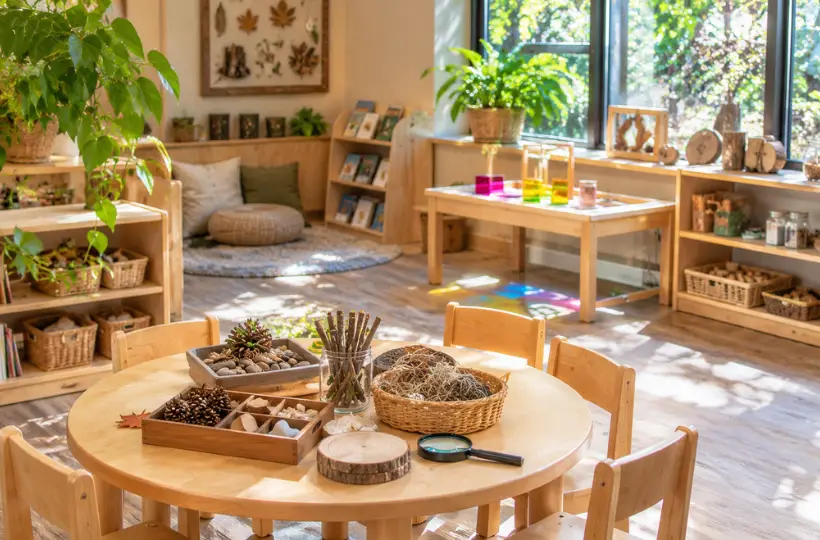
Imagine a small table near a window with leaves, magnifying glasses, and drawing materials. Without being given detailed instructions, children might begin comparing leaf shapes, examining their textures, or drawing what they notice.
The space itself encourages investigation.
That’s the idea behind thoughtful Reggio Emilia classroom design. Educators arrange spaces and materials intentionally, giving children opportunities to make discoveries at their own pace.
5 Amazing Features of a Reggio Emilia Classroom
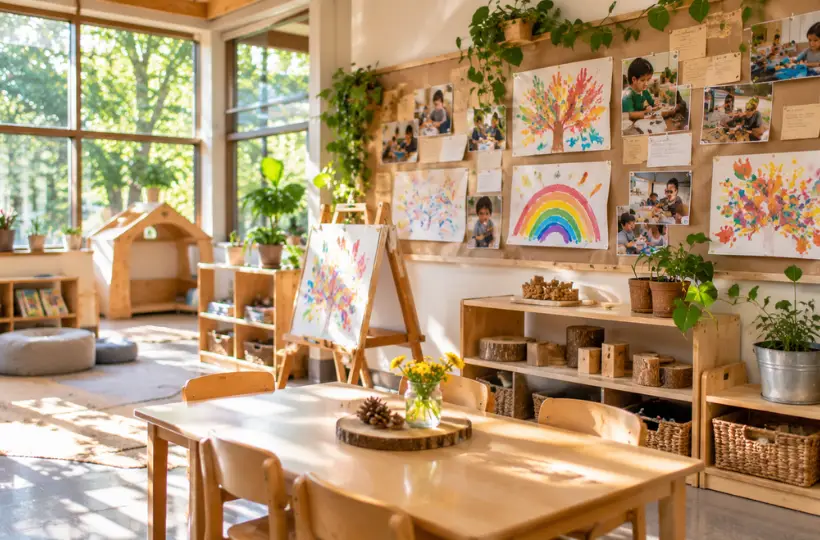
1. Natural Light and Welcoming Spaces
A classroom doesn’t need to be filled with bright colours to capture children’s attention.
Natural light, warm wooden furniture, comfortable seating, and carefully organized materials can create a welcoming atmosphere.
The goal is to make children feel comfortable enough to explore, concentrate, and spend time developing their ideas.
2. Materials That Spark Imagination
A piece of fabric might become a superhero cape, a river, or the roof of an imaginary house.
That’s the beauty of open-ended materials.
Reggio Emilia classrooms often include wooden blocks, clay, fabric, pinecones, and other age-appropriate resources that children can use in many different ways.
Unlike toys designed for a single purpose, these materials invite children to imagine new possibilities.
Explore our guide to
Reggio Emilia activities for preschoolers for practical examples of how these materials can support hands-on learning.
3. Spaces That Bring Children Together
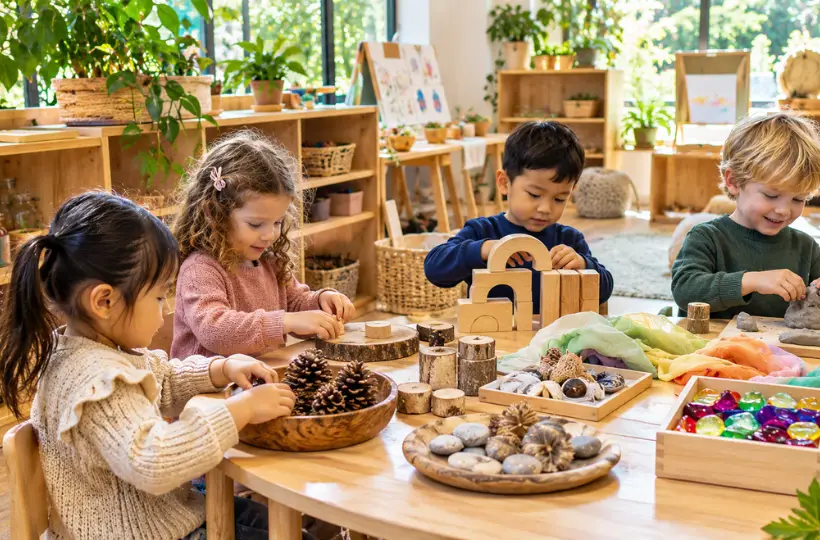
Some of the most meaningful discoveries happen when children work together.
A small group building a neighbourhood with wooden blocks might discuss where the houses belong, how to connect the roads, or what their community needs.
Shared tables and flexible learning areas give children opportunities to exchange ideas, listen to others, and solve problems together.
Quiet spaces are equally important, especially for children who prefer to explore independently or need a moment to themselves.
4. Displays That Tell Children’s Stories
Have you ever wondered what your child was thinking while creating a particular drawing?
In a Reggio Emilia-inspired classroom, artwork often tells a bigger story.
Educators may display children’s drawings alongside photographs, observations, and notes from classroom conversations.
These displays help families understand not only what children created but also how their ideas developed.
The emphasis is on celebrating the learning process rather than simply displaying the finished result.
5. Bringing Nature Into the Classroom
Living in North Vancouver means that inspiration from nature is rarely far away.
Leaves, branches, seasonal colours, and observations from outdoor walks can all provide starting points for classroom investigations.
Children might compare different textures, watch seeds grow, or create artwork inspired by the changing seasons.
Bringing nature into the learning environment helps connect classroom experiences with the world children encounter every day.
What North Vancouver Parents Should Look for During a Classroom Tour
When visiting a childcare centre, try to look beyond the furniture and decorations.
Notice whether children can reach appropriate learning materials, whether educators listen to children’s ideas, and whether the classroom provides opportunities for both independent exploration and shared play.
A beautiful learning environment is valuable, but responsive educators and meaningful relationships matter just as much.
Our guide to
important questions to ask a daycare can help you prepare for your next childcare visit.
Frequently Asked Questions
How is a Reggio Emilia classroom different from a Montessori classroom?
Both approaches value thoughtfully prepared environments and children’s independence. Montessori typically emphasizes specialized learning materials and individual work, while Reggio Emilia places particular emphasis on creative expression, collaborative projects, and emerging interests.
Read our
Montessori vs Reggio Emilia guide to learn more.
Does a Reggio Emilia classroom need expensive materials?
No. Simple, safe, and age-appropriate materials can inspire meaningful exploration. What matters most is how educators use those resources to support children’s curiosity.
Discover a Welcoming Early Learning Environment in North Vancouver
Choosing a childcare centre is about finding a place where your child feels comfortable, supported, and excited to explore.
At Child Connect Early Learning, we value children’s curiosity, creativity, and individual development.
Our North Vancouver centre welcomes families looking for a nurturing environment for their infants, toddlers, and preschoolers.
Visit
Child Connect North Vancouver to discover our programs, arrange a tour, or inquire about enrollment availability.