Have you ever watched your child turn an empty cardboard box into a spaceship or spend an entire afternoon collecting leaves? Children have a wonderful ability to find excitement in the simplest things.
That natural curiosity is at the heart of
Reggio Emilia activities. Instead of telling children exactly what to create or how to play, this approach gives them opportunities to explore, experiment, and discover things for themselves.
For families in North Vancouver, where nature is practically on our doorstep, opportunities for this kind of learning are everywhere.
Let’s explore five activities that can make everyday learning a little more meaningful.
What Are Reggio Emilia Activities?
Reggio Emilia activities often begin with something that catches a child’s attention. It could be a rainbow outside, an interesting insect, or even the sound of rain against a window.
Educators build on that curiosity by introducing materials, asking questions, and giving children time to explore their ideas.
There is no expectation that every child will create the same thing or reach the same conclusion. The experience itself is an important part of learning.
This philosophy originated in Italy and continues to inspire early childhood educators worldwide. You can learn more through the official
Reggio Children website or explore our detailed guide to the
Reggio Emilia approach.
5 Exciting Reggio Emilia Activities for Preschoolers
1. Nature Exploration and Collections
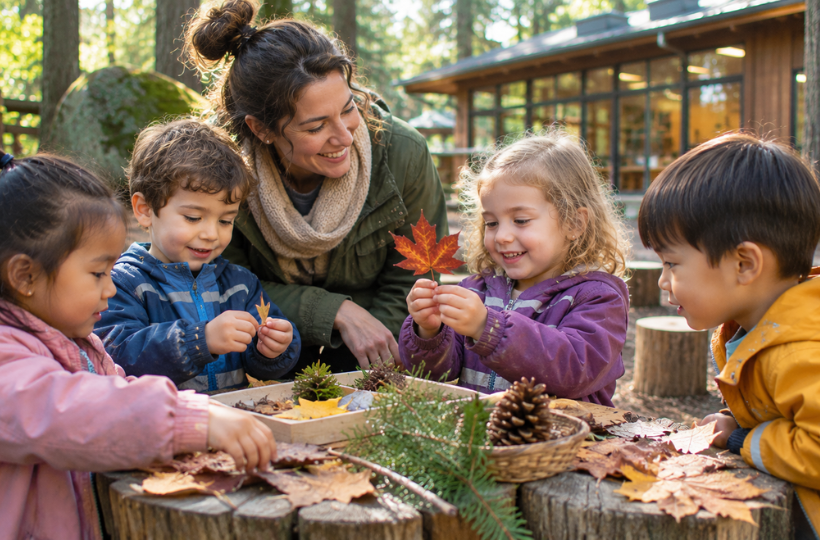
A simple walk through a North Vancouver park can turn into an exciting learning adventure.
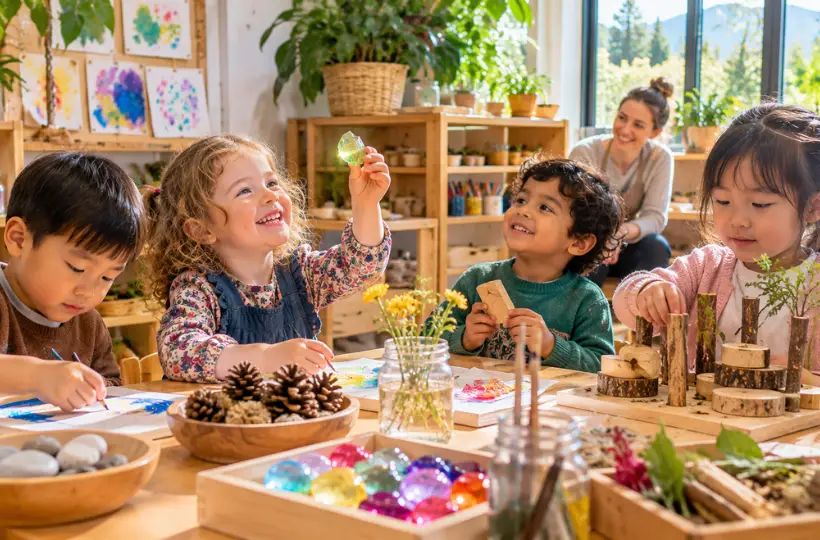
Children might collect fallen leaves, compare pinecones, or wonder why certain trees look different from others.
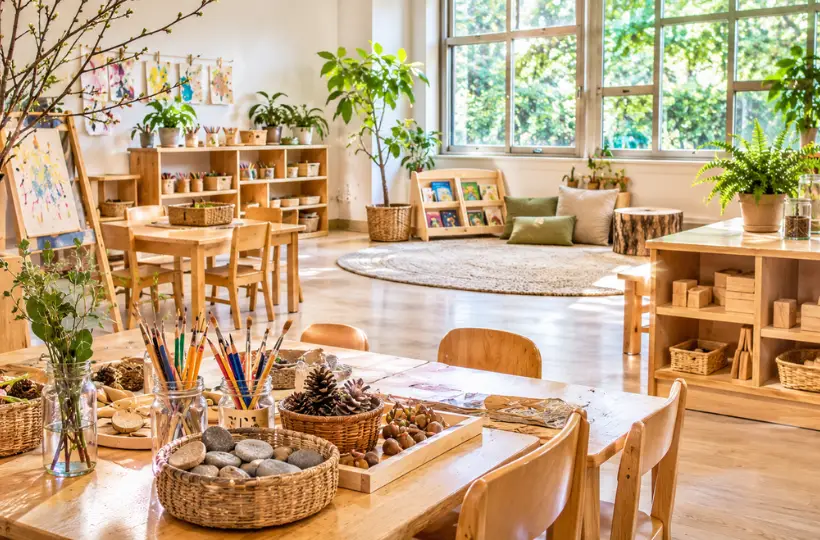
Back inside, they can examine their discoveries with magnifying glasses, draw what they found, or arrange their collections by colour and shape.
What begins as a walk outdoors can become an opportunity to explore nature, practise observation, and ask new questions.
2. Open-Ended Art and Creative Expression
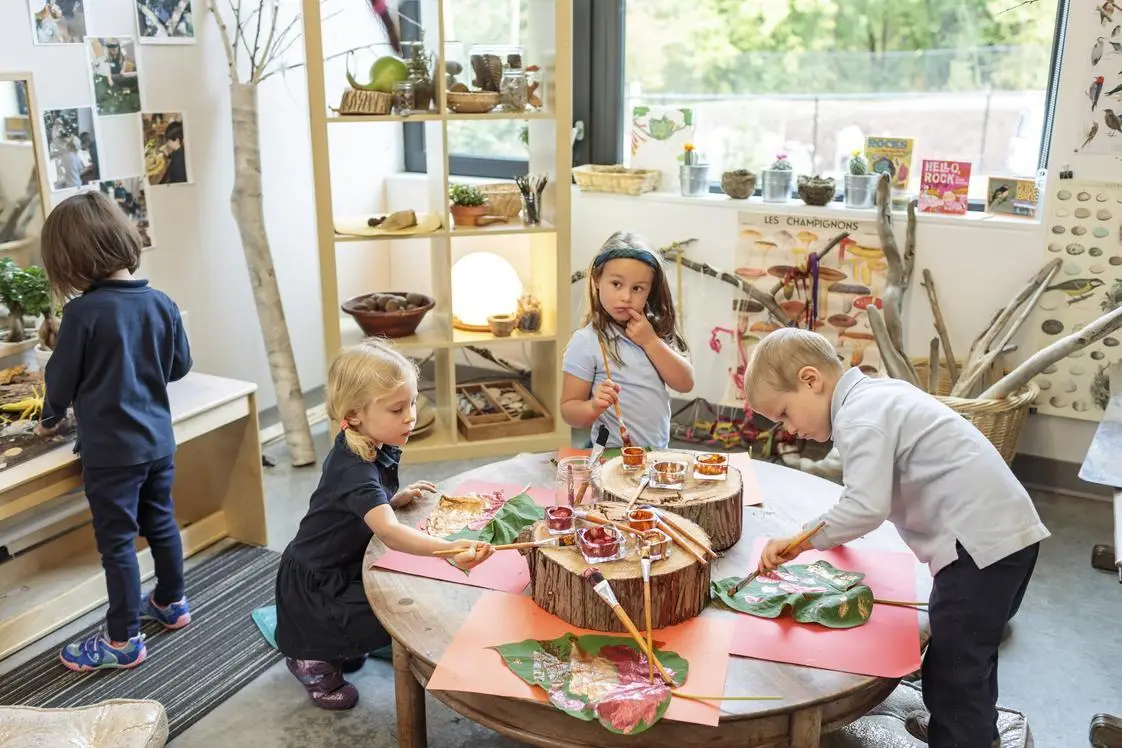
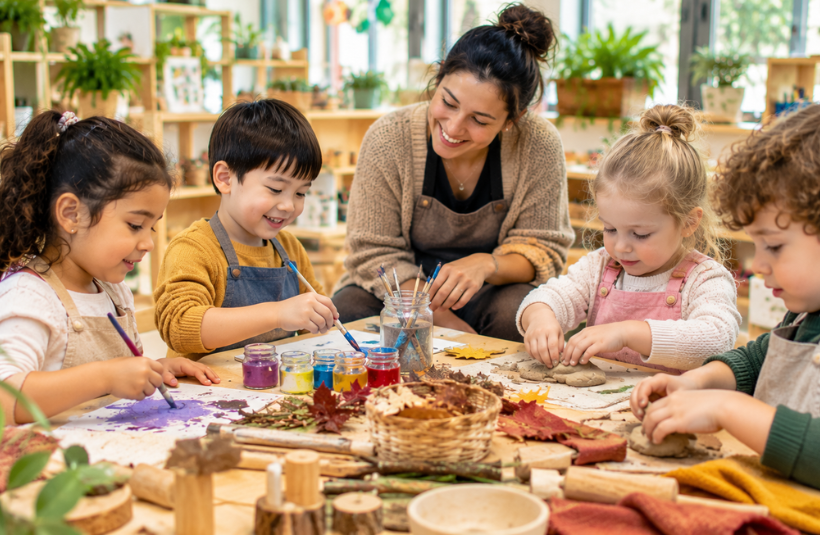
Imagine giving three children some paint, paper, leaves, and clay. One might create a garden, another might make colourful patterns, and the third might simply enjoy mixing colours.
There is no wrong answer.
Open-ended art allows children to express themselves without worrying about making something that looks perfect. Along the way, they can develop fine motor skills, imagination, and confidence in their own ideas.
3. Building and Collaborative Construction
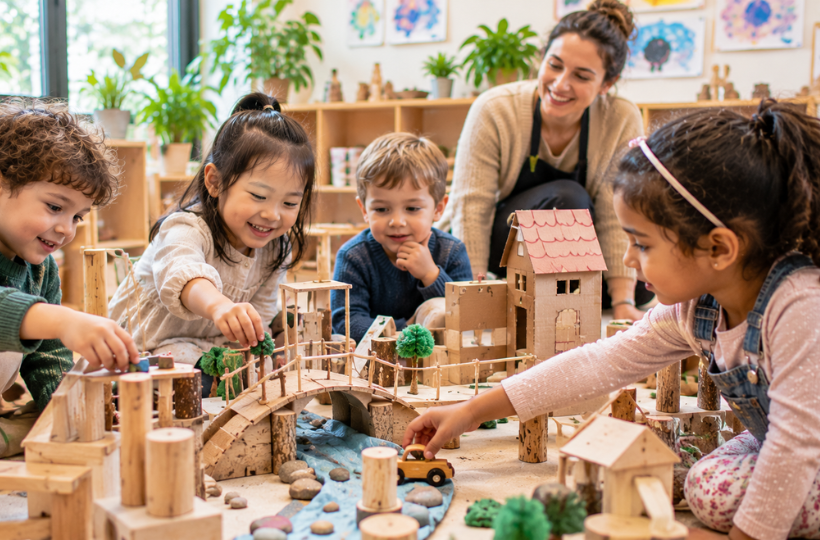
A basket of wooden blocks can become almost anything in a preschool classroom.
Perhaps one child wants to build a bridge while another imagines a town with roads and houses. Before long, they may be working together to create something neither had originally imagined.
These Reggio Emilia learning activities give children opportunities to share ideas, solve problems, and learn how to work together.
Even when a tower falls over, there is something new to discover.
4. Light and Shadow Exploration
Why does a shadow become bigger when an object moves closer to a light?
Questions like this can lead to surprisingly engaging learning experiences.
With safe light sources, translucent materials, and everyday objects, children can experiment with colours, shapes, and shadows. Educators can encourage them to make predictions and see what happens.
It’s a playful introduction to scientific thinking without the need for a formal science lesson.
5. Creative Storytelling and Dramatic Play
Sometimes a few puppets, pieces of fabric, and cardboard boxes are all children need to create an imaginary world.
They might pretend to run a bakery, care for animals, or travel through a magical forest.
As children invent characters and share stories, they have opportunities to practise communication, explore emotions, and develop their imaginations.
How Educators Support Child-Led Activities
An educator doesn’t always need to provide an answer. Sometimes, asking a thoughtful question is more valuable.
Questions such as “What do you think will happen?” or “How could we try that differently?” encourage children to think through their own ideas.
This balance between independence and guidance is also important in Montessori education, although the two philosophies approach learning differently.
Our
Montessori vs Reggio Emilia guide explains these differences in more detail.
Bringing Reggio Emilia Activities Into Everyday Life in North Vancouver
You don’t need a classroom full of special materials to encourage this kind of learning at home.
A family walk through the neighbourhood, an afternoon building with cardboard boxes, or a conversation about something your child noticed outside can all become meaningful experiences.
The most important thing is giving your child the time and space to be curious.
Frequently Asked Questions
Can Reggio Emilia activities be done at home?
Absolutely. Drawing, building, storytelling, and exploring natural materials are simple ways to encourage child-led learning at home.
Are Reggio Emilia activities suitable for toddlers?
Yes. Activities can be adapted to toddlers using sensory play, simple art projects, movement, and safe, age-appropriate materials with appropriate adult supervision.
Discover Creative Early Learning at Child Connect North Vancouver
At Child Connect Early Learning, we believe childhood should be filled with curiosity, meaningful discoveries, and opportunities to grow.
Our North Vancouver centre welcomes families looking for a nurturing early learning environment for their infants, toddlers, and preschoolers.
Visit
Child Connect North Vancouver to explore our programs, arrange a visit, or ask about enrollment availability.