Have you ever noticed how proud your child looks after figuring something out on their own? Perhaps they finally built a tower that didn’t fall over or discovered how to mix two colours to create a new one.
These little moments may seem ordinary, but they are an important part of growing up.
Some of the most meaningful
Reggio Emilia benefits come from giving children the freedom to explore their interests, express their ideas, and discover what they are capable of achieving.
One of the most meaningful Reggio Emilia benefits is that educators look beyond what children know. They also pay attention to how children think, communicate, explore their surroundings, and develop relationships with others.
Understanding Reggio Emilia Benefits for Children
Young children learn so much through everyday experiences. A conversation with a friend, an afternoon spent painting, or a question about something they noticed outside can all become valuable learning opportunities.
The Reggio Emilia philosophy builds on these natural experiences by encouraging children to take an active role in their learning.
Instead of focusing entirely on what children know, educators also pay attention to how they think, communicate, explore, and develop relationships.
You can learn more about this philosophy in our comprehensive guide to the
Reggio Emilia approach.
The
BC Early Learning Framework also emphasizes the importance of relationships, well-being, exploration, and meaningful learning experiences in early childhood education.
5 Amazing Reggio Emilia Benefits for Young Children
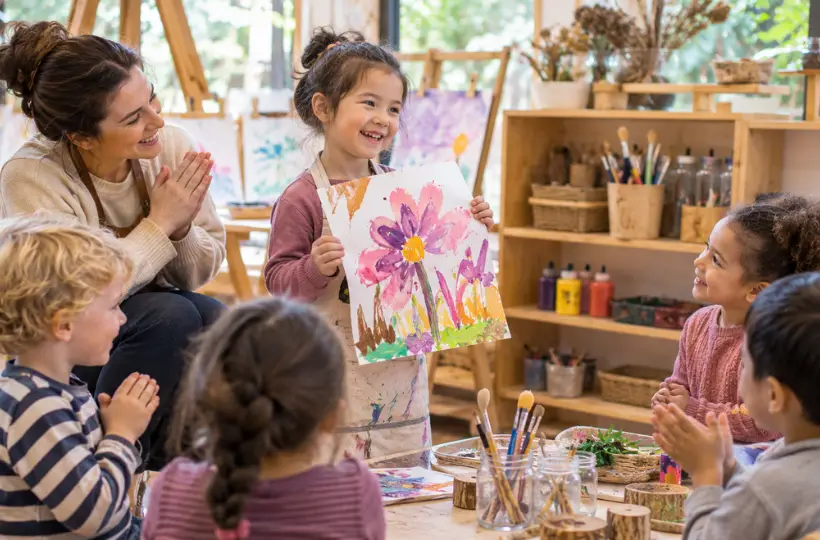
1. Building Confidence and Independence
There’s something special about hearing a child proudly say, “I did it myself!”
Whether they’re choosing materials for an art project or figuring out how to put pieces together, small accomplishments can help children develop confidence in their abilities.
In a Reggio Emilia-inspired environment, educators provide guidance while allowing children to make age-appropriate decisions.
Over time, these experiences can help children become more comfortable expressing their opinions, taking initiative, and trying unfamiliar things.
2. Encouraging Creativity and Imagination
Give a child a cardboard box, and you might be surprised by what it becomes.
One day it’s a boat. The next day, it’s a bakery or a house for imaginary animals.
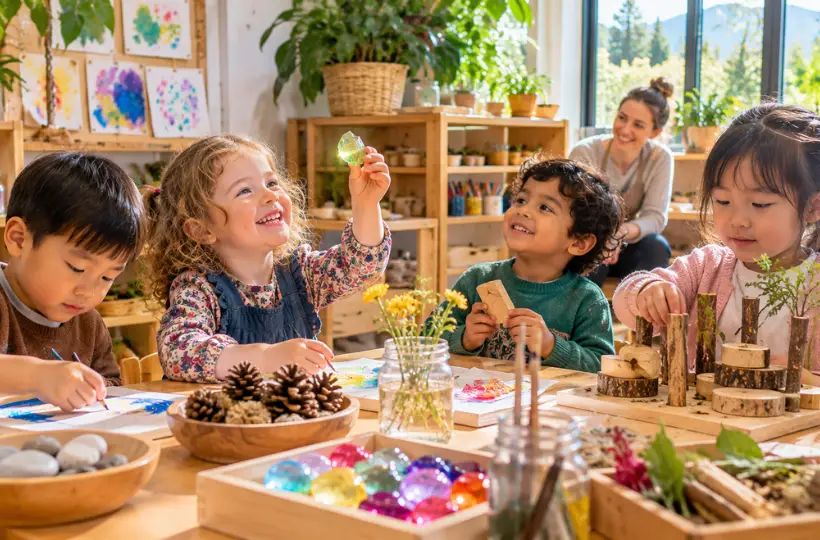
Encouraging creative expression is one of the key Reggio Emilia benefits for preschool children. Through drawing, painting, construction, storytelling, music, and movement, children discover different ways to express their ideas and explore their imagination.
Rather than worrying about getting everything right, they have opportunities to experiment and enjoy the process.
Our guide to
Reggio Emilia activities for preschoolers shares practical examples of this kind of creative learning.
The concept of the hundred languages of children, explained by
Reggio Children, recognizes that children have many different ways to communicate their ideas, express themselves, and develop their understanding of the world.
3. Developing Communication and Social Skills
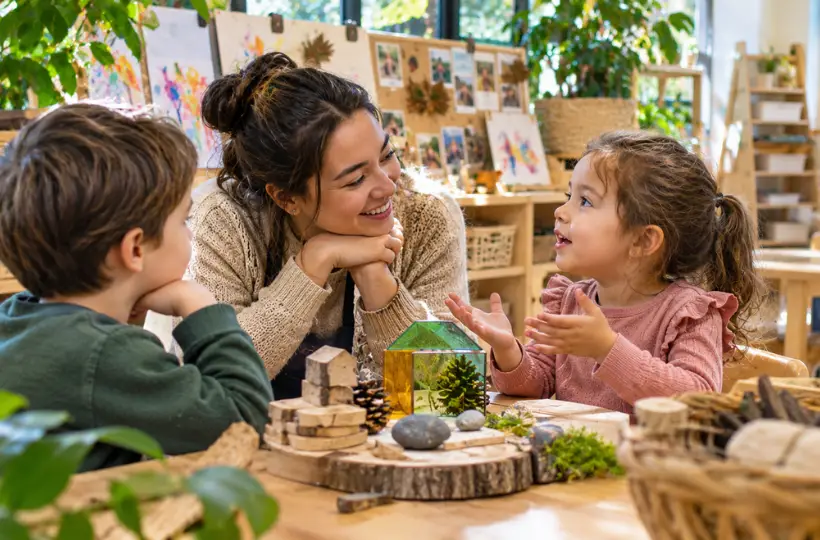
Learning alongside other children creates opportunities to practise important social skills.
Imagine two preschoolers who both want to use the same building materials. With gentle support from an educator, they might learn to take turns, explain their ideas, or find a way to build something together.
These everyday interactions can help children develop cooperation, empathy, and communication skills.
Among the social and emotional Reggio Emilia benefits are opportunities to develop empathy, cooperation, and an understanding of other people’s feelings. Children gradually learn that their classmates may have different ideas and perspectives.
4. Strengthening Problem-Solving Skills
Not every childhood experiment goes according to plan, and that’s perfectly fine.
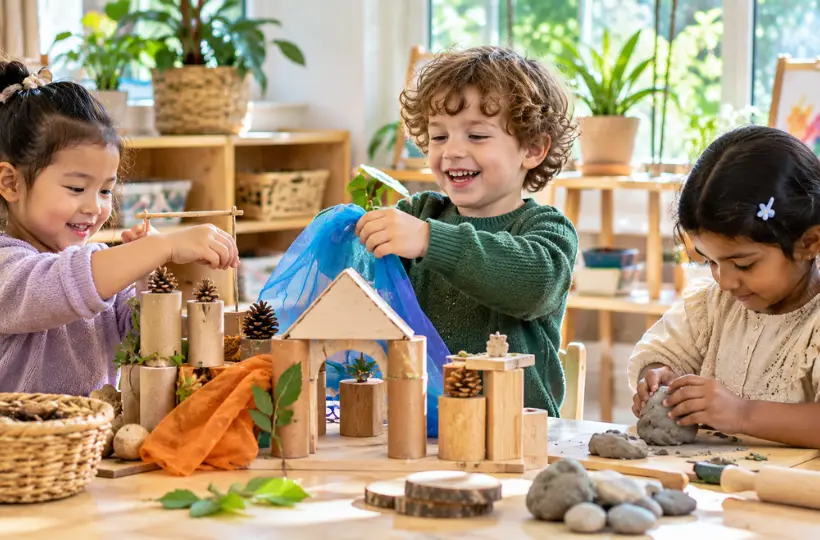
When a bridge made from wooden blocks collapses, an educator might ask, “What could we change to make it stronger?”
Instead of immediately solving the problem for the child, the educator encourages another attempt.
Experiences like these give children opportunities to practise patience, flexible thinking, and persistence while discovering that mistakes are a natural part of learning.
5. Developing a Love of Learning
Children are often most engaged when they are exploring something that genuinely interests them.
For North Vancouver families, a walk through a local park might inspire questions about trees, birds, insects, or the changing seasons.
Those questions can lead to drawings, conversations, stories, and further discoveries.
A thoughtfully designed
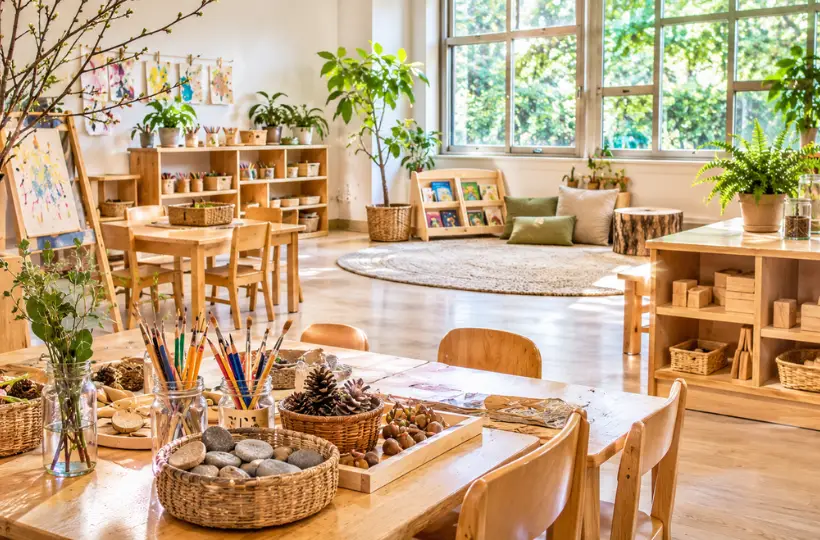
Reggio Emilia classroom environment can help extend this curiosity by offering materials and spaces that invite exploration.
Do Montessori and Reggio Emilia Share Similar Benefits?
Both Montessori and Reggio Emilia recognize children as capable learners who benefit from independence and meaningful hands-on experiences.
Montessori typically emphasizes individually paced learning and specialized educational materials, while Reggio Emilia places greater emphasis on collaboration, creative expression, and projects inspired by children’s interests.
Both can offer valuable learning experiences when implemented thoughtfully.
Explore our
Montessori vs Reggio Emilia guide to better understand the differences.
How North Vancouver Parents Can Recognize Reggio Emilia Benefits
Parents don’t need to wait for a formal progress report to recognize Reggio Emilia benefits in their children’s everyday lives. Small changes in behaviour, communication, creativity, and independence can offer meaningful insights into their development.
Perhaps your child starts asking more questions, becomes more comfortable sharing ideas, or tries a different solution when something doesn’t work.
These small changes can offer meaningful insights into their development.
Every child grows at their own pace, so it’s important to celebrate individual progress rather than compare children with one another.
Frequently Asked Questions
Does Reggio Emilia help children become more independent?
The approach provides opportunities for children to make decisions, explore their interests, and develop confidence with appropriate educator support.
Can shy children benefit from Reggio Emilia education?
Yes. Children can express themselves through art, movement, play, and other forms of communication without always needing to speak in front of a group.
Does Reggio Emilia prepare children for kindergarten?
Reggio Emilia-inspired experiences can support foundational skills such as communication, cooperation, curiosity, independence, and problem-solving, which are valuable during the transition to kindergarten.
What are the main Reggio Emilia benefits for preschoolers?
The main Reggio Emilia benefits include opportunities to develop confidence, creativity, independence, communication, problem-solving skills, and a positive attitude toward learning through meaningful hands-on experiences.
Help Your Child Grow With Confidence at Child Connect North Vancouver
Every child deserves a place where their ideas are valued, their curiosity is encouraged, and their individual progress is celebrated.
At Child Connect Early Learning, we believe meaningful early learning begins with positive relationships, creative experiences, and opportunities for discovery.
Our North Vancouver centre welcomes families seeking a nurturing environment for their infants, toddlers, and preschoolers.
Visit
Child Connect North Vancouver to explore our programs, arrange a tour, or inquire about enrollment availability.
Let’s give your child the opportunity to discover, create, and grow with confidence.