Choosing the right preschool is an exciting milestone for both children and parents. It marks the beginning of a new chapter filled with discovery, friendships, creativity, and growing independence. However, with different educational philosophies, childcare programs, age requirements, and enrollment options available, knowing where to start can feel overwhelming.
This Preschool 101 guide is designed to help families understand preschool education in British Columbia, what children learn, how preschool supports early childhood development, and what parents should consider when selecting a program.
Whether you are exploring preschool in North Vancouver, West Vancouver, or elsewhere in BC, understanding the foundations of early learning can help you make a confident and informed decision for your child.
Preschool 101: What Is Preschool Education?
Preschool education is an important stage of early childhood learning that helps young children develop the foundational skills they need for school and everyday life.
Unlike traditional classroom instruction for older students, preschool focuses on developmentally appropriate experiences that encourage exploration, communication, creativity, and meaningful interactions.
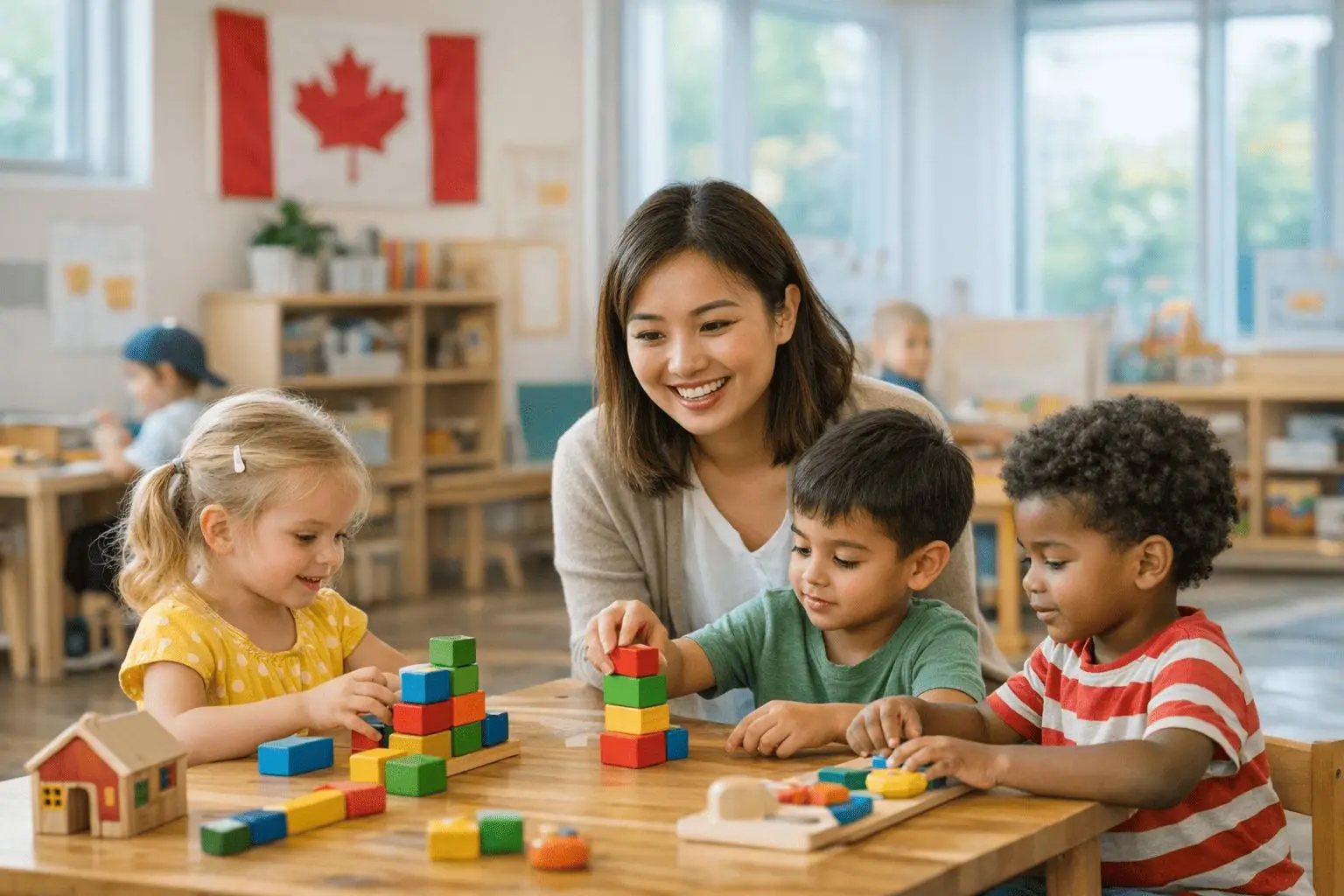
Children learn through activities such as storytelling, building, painting, experimenting, playing outdoors, and collaborating with their peers. These everyday experiences introduce important concepts while allowing children to develop at their own pace.
A well-rounded preschool education program supports several areas of development:
- Social and emotional development
- Language and communication
- Cognitive development and problem-solving
- Fine and gross motor skills
- Creativity and self-expression
- Independence and self-confidence
- Early literacy and numeracy
The goal is not simply to teach children letters and numbers before kindergarten. It is to help them become curious, confident, and enthusiastic learners who feel comfortable exploring the world around them.
What Age Do Children Start Preschool in BC?
Many children begin preschool between the ages of three and five, although eligibility depends on the type of childcare program and individual centre requirements.
Under British Columbia’s
Child Care Licensing Regulation, children entering the licensed Preschool (30 Months to School Age) category must be at least 30 months old when they enter and turn three by December 31 of their entry year.
However, parents should understand that preschool-aged children can also attend licensed group childcare programs that provide early learning experiences.
Age is only one consideration when choosing a program. Parents may also want to consider their child’s communication skills, growing independence, interest in interacting with other children, and comfort with new routines.
Every child develops differently. Children do not need to master all these skills before attending preschool. A supportive learning environment can help them develop these abilities over time.
If you are preparing your child for their first early learning experience, our guide to
signs your child is ready for daycare offers additional information about developmental readiness.
What Is the Difference Between Preschool and Daycare?
Parents often use the terms preschool and daycare interchangeably. Although both can support early childhood development, their schedules, age groups, and licensing categories may differ.
| Feature |
Licensed preschool category |
Group childcare |
| Age group |
Preschool-aged children |
Depends on the licensing category |
| Daily schedule |
Up to four hours per day |
May provide longer care |
| Learning opportunities |
Developmentally appropriate early learning |
Early learning combined with childcare |
| Family needs |
Often suitable for shorter sessions |
May suit families requiring extended care |
| Daily activities |
Play, exploration and social interaction |
Play, learning, care routines and exploration |
In BC, the specific licensed preschool category is limited to four hours of care per child per day. Other licensed childcare categories may provide longer hours while also incorporating preschool education.
This means a centre offering longer childcare hours can still provide meaningful preschool learning experiences.
Rather than choosing a program based on its name alone, parents should consider its educational approach, licensing category, daily schedule, educators, and the individual needs of their child.
Why Is Preschool Education Important?
The early years are a period of significant development. Children begin building relationships, expressing their emotions, exploring their surroundings, and developing the skills that support future learning.
A nurturing preschool environment provides opportunities to practise these abilities through everyday experiences.
Developing Social Skills
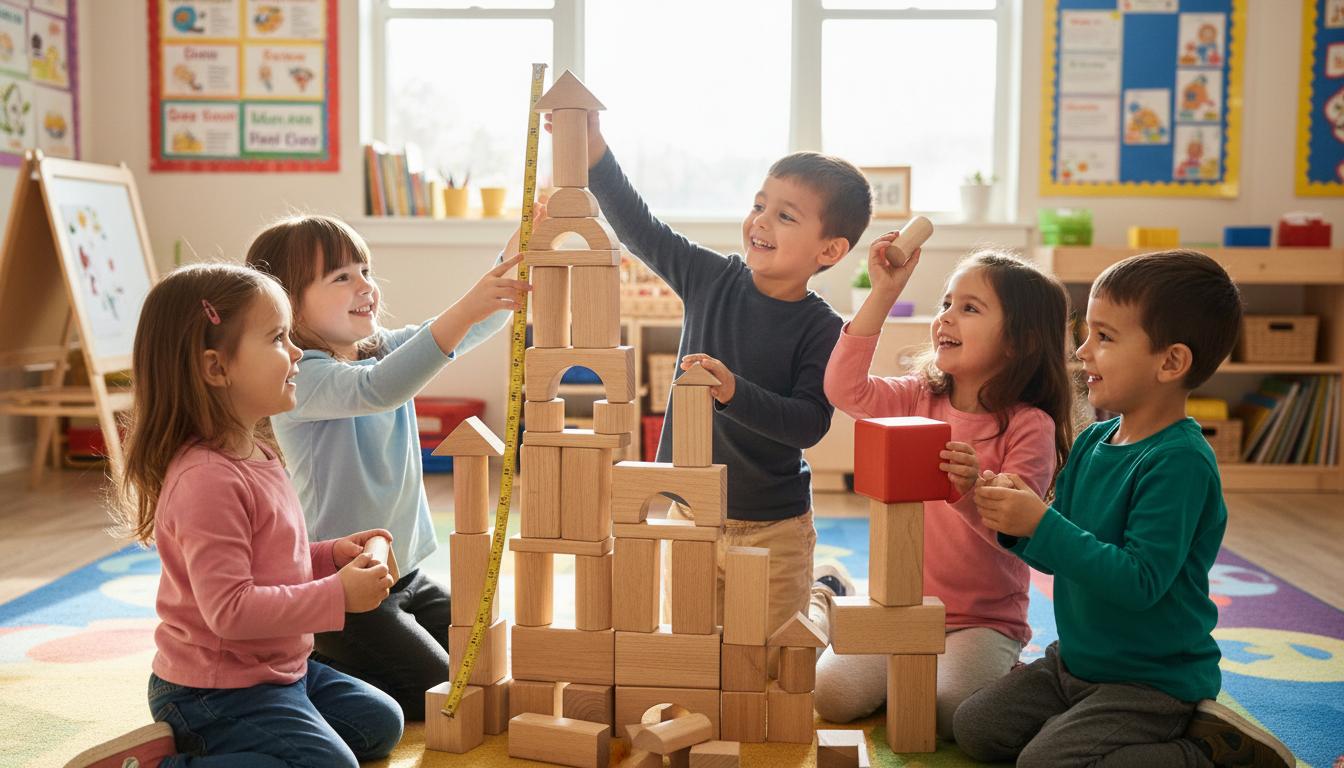
Preschool introduces children to a community beyond their immediate family. They have opportunities to build friendships, share materials, take turns, collaborate, and learn to respect different perspectives.
These experiences help children develop communication and cooperation skills that can support future relationships.
You can learn more in our article about
helping children build social skills and resolve conflicts at daycare.
Supporting Emotional Development
Young children are still learning how to understand and manage their emotions. Educators can help children recognize their feelings, express their needs, and develop age-appropriate strategies for handling challenges.
A predictable and supportive environment can also help children build confidence when experiencing unfamiliar situations.
Encouraging Independence
Simple daily responsibilities, such as organizing belongings, selecting activities, putting away materials, and preparing for transitions, encourage children to become more independent.
These small accomplishments help children develop confidence in their own abilities.
Building a Positive Relationship With Learning
When children are encouraged to ask questions, explore ideas, and learn through discovery, education becomes a meaningful and enjoyable experience.
Preschool can help nurture a positive attitude toward learning that continues beyond the early years.
What Do Children Learn in Preschool?
Preschool learning takes place throughout the day, not just during structured educational activities. Ordinary experiences can become valuable opportunities for children to develop new skills.
Early Literacy and Language
Children develop language skills through conversations, storytelling, songs, picture books, and imaginative play.
Educators may introduce letters, sounds, new vocabulary, and opportunities for children to express their thoughts and ideas.
Early Mathematics
Preschool children explore mathematical concepts through counting, sorting, comparing, recognizing patterns, and working with shapes.
For example, building a tower with blocks can introduce concepts such as size, balance, measurement, and spatial awareness.
Science and Discovery
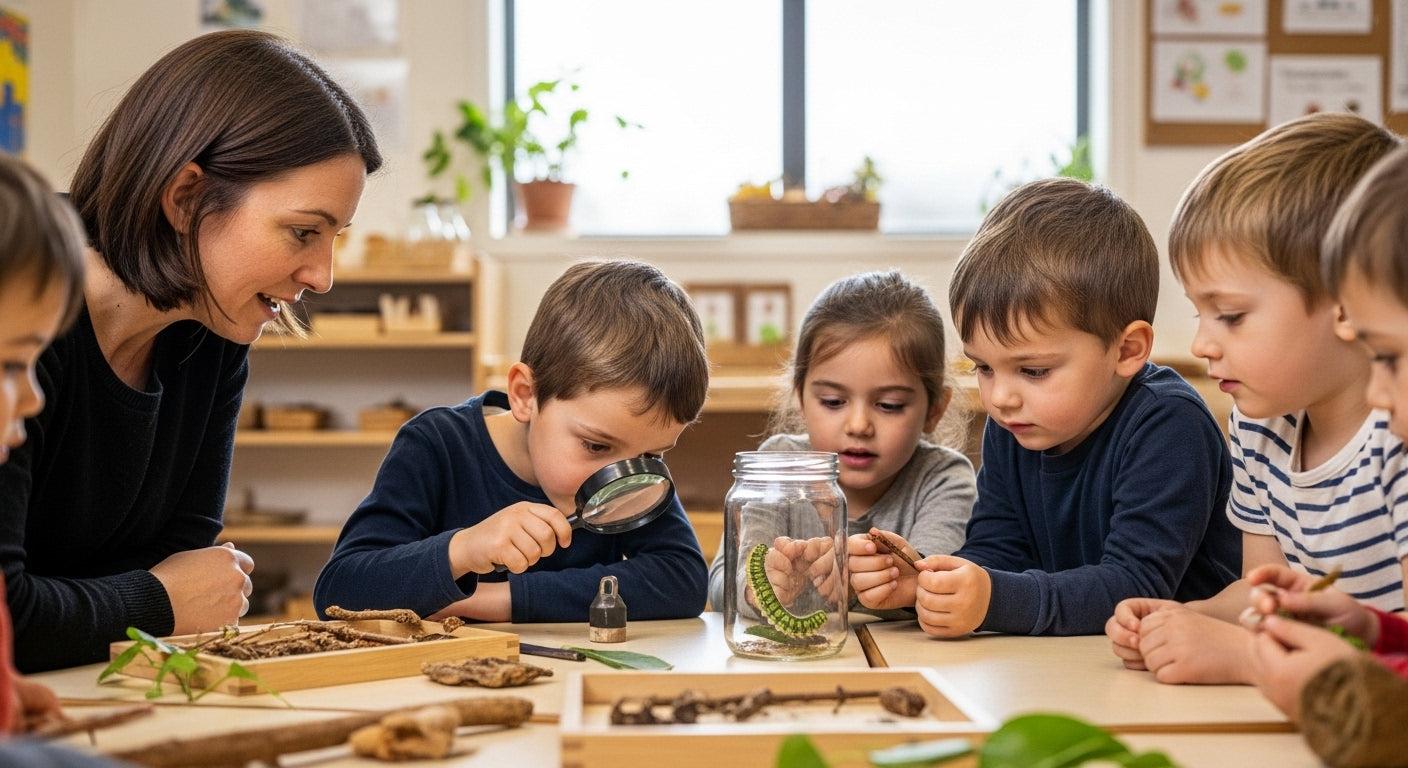
Young children are naturally curious. Simple experiments, gardening, observing nature, and exploring everyday materials can encourage them to ask questions and investigate how things work.
These experiences create opportunities to develop early problem-solving and critical-thinking skills.
Creative Arts and Music
Drawing, painting, crafting, music, movement, and dramatic play allow children to explore their imagination and communicate in different ways.
Creative experiences also provide opportunities to develop coordination, concentration, and self-expression.
Physical Development
Outdoor play, dancing, climbing, drawing, and manipulating small objects help children practise both fine and gross motor skills.
Movement-based activities are an important component of a balanced preschool learning experience.
Understanding Different Preschool Teaching Methods
Preschool education is not limited to one teaching philosophy. Different programs may incorporate a variety of approaches based on their educational values and the needs of their children.
Montessori-Inspired Learning
Montessori-inspired education encourages independence, hands-on exploration, purposeful activities, and respect for children’s individual development.
Children are supported in making choices, exploring learning materials, and completing activities with increasing independence.
Discover more about the
benefits of Montessori for preschool children and
what children learn in a Montessori curriculum.
Reggio Emilia-Inspired Learning
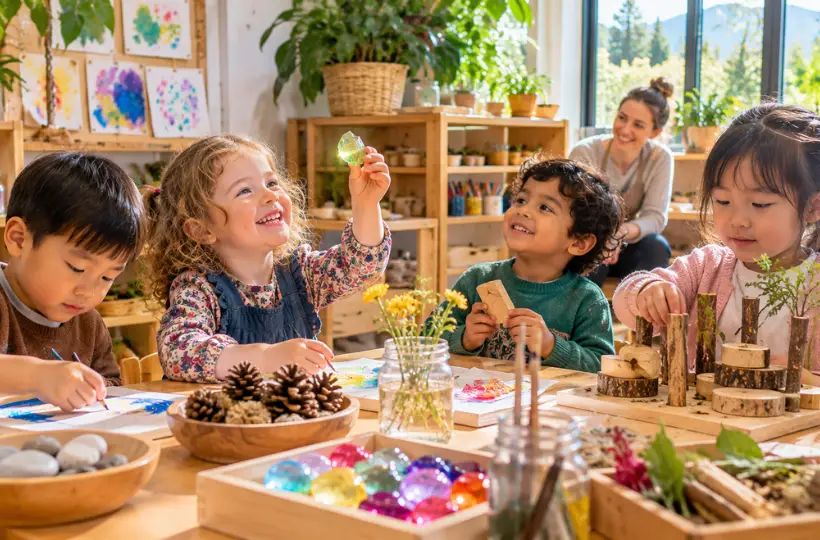
The Reggio Emilia approach recognizes children as capable and curious learners. It emphasizes relationships, creativity, exploration, collaboration, and the importance of the learning environment.
Educators observe children’s interests and encourage them to investigate ideas through projects, conversations, and creative experiences.
Read our guide to the
Reggio Emilia approach in North Vancouver to learn more about this educational philosophy.
Play-Based Learning
Play-based learning encourages children to explore concepts and develop skills through meaningful play.
Building blocks, imaginative games, sensory experiences, and outdoor exploration can all create opportunities for learning.
At Child Connect Early Learning, our educational philosophy draws inspiration from Montessori and Reggio Emilia principles, recognizing the importance of children’s curiosity, creativity, relationships, and individual development.
If you are comparing educational approaches, our article on
Montessori vs. Reggio Emilia and other philosophies can help you understand their differences.
What Should a Preschool Curriculum Include?
A quality preschool curriculum should offer a balance of child-led exploration, educator-guided activities, physical movement, creative expression, and social interaction.
Rather than focusing exclusively on academic achievement, early learning should support children’s overall well-being and development.
Important curriculum components may include:
- Language and communication activities
- Early mathematics and scientific exploration
- Creative arts and imaginative play
- Indoor and outdoor learning opportunities
- Social and emotional development
- Hands-on problem-solving activities
- Opportunities for independence and collaboration
The
British Columbia Early Learning Framework provides guidance for supporting meaningful early learning experiences across the province.
Parents can explore
Child Connect’s educational philosophy to better understand the values that guide our approach to early childhood education.
How Does Preschool Prepare Children for Kindergarten?
Kindergarten readiness involves much more than recognizing letters, writing numbers, or knowing the alphabet.
Children benefit from developing practical, emotional, and social abilities that help them participate confidently in a new learning environment.
Preschool can provide opportunities to develop skills such as:
- Communicating needs and ideas
- Participating in group activities
- Listening and following age-appropriate instructions
- Expressing and managing emotions
- Developing positive relationships
- Making choices independently
- Exploring new activities with confidence
A supportive preschool program recognizes that children develop these abilities at different rates.
The goal is to encourage progress through positive experiences rather than place unnecessary academic pressure on young children.
Is Preschool Free in BC?
Preschool education is not universally free in British Columbia. The amount families pay depends on the provider, program type, schedule, and applicable government funding.
Some families may qualify for financial assistance through programs such as the Affordable Child Care Benefit. Other fee-reduction initiatives may also help eligible families access more affordable childcare.
Eligibility and assistance amounts depend on individual circumstances and the childcare arrangement.
Parents should discuss tuition, additional fees, and available funding directly with their chosen early learning centre.
Our existing resources can help you understand childcare affordability in BC:
For the latest information about funding and eligibility, parents should consult the
Government of British Columbia’s childcare resources.
How to Choose the Right Preschool in North Vancouver or West Vancouver
Finding a preschool that fits your child’s needs and your family’s daily routine is an important decision.
Families living on Vancouver’s North Shore may consider factors such as accessibility, commuting time, proximity to home or work, educational philosophy, and the quality of the learning environment.
When exploring preschool programs, consider the following questions.
What Is the Centre’s Educational Philosophy?
Ask how educators approach early childhood learning and how their philosophy influences children’s everyday experiences.
Look for an approach that respects children’s individual development while encouraging curiosity, creativity, and independence.
Is the Childcare Centre Licensed?
Licensing is an important consideration when evaluating childcare providers in British Columbia.
Learn more about the differences between
licensed and unlicensed daycare in BC.
What Does the Learning Environment Look Like?
A welcoming environment should encourage children to explore, interact, play, and discover new ideas.
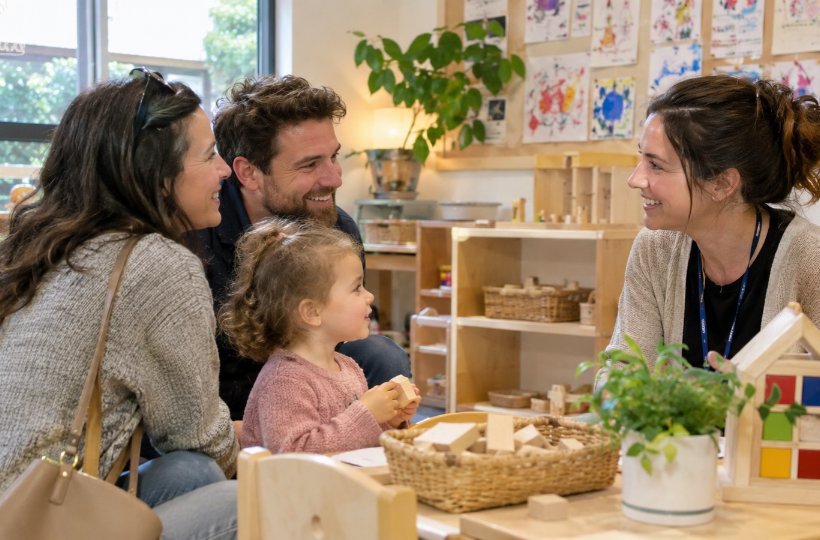
During a tour, observe how learning materials are organized, how educators interact with children, and whether the environment offers varied learning opportunities.
How Do Educators Communicate With Parents?
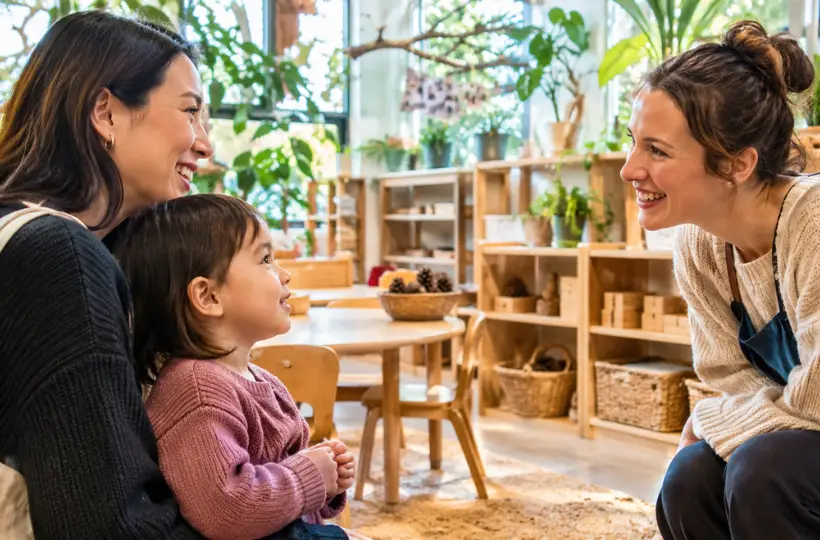
Positive relationships between families and educators help support children’s development.
Ask how the centre communicates children’s progress, daily experiences, and any concerns that may arise.
For additional guidance, explore our list of
important questions to ask a daycare before making an enrollment decision.
Preschool Education at Child Connect Early Learning
At Child Connect Early Learning, we believe that meaningful education begins with curiosity, connection, and a supportive environment where children feel encouraged to explore.
Our preschool program for children ages three to five draws inspiration from Montessori and Reggio Emilia educational principles.
We recognize that every child brings different interests, abilities, and experiences to the classroom. Our approach values individual development while encouraging meaningful interactions, creativity, independence, and a positive relationship with learning.
Families can explore our two North Shore locations:
Child Connect Early Learning — North Vancouver
Our North Vancouver centre provides early learning experiences for local families, including those living in Lower Lonsdale, Moodyville, and surrounding communities.
Explore our North Vancouver early learning centre.
Child Connect Early Learning — West Vancouver
Our West Vancouver centre welcomes families exploring childcare and early learning opportunities near Park Royal, Ambleside, and surrounding West Vancouver neighbourhoods.
Explore our West Vancouver early learning centre.
We encourage parents to visit their preferred location, meet our educators, explore the learning environment, and discuss their child’s individual needs.
Frequently Asked Questions About Preschool in BC
What is the main purpose of preschool education?
Preschool education supports children’s social, emotional, physical, cognitive, and language development through age-appropriate learning experiences.
Is three years old a good age to start preschool?
Three is a common age to begin preschool. However, the right starting time depends on your child’s individual development, family needs, and the program’s enrollment requirements.
Is preschool mandatory in British Columbia?
No. Preschool is not mandatory in BC. Families can choose whether to enroll their children in a preschool or another early learning program before entering kindergarten.
Do children need to know letters and numbers before starting preschool?
No. Preschool provides opportunities for children to develop early literacy, numeracy, communication, and other foundational skills at a developmentally appropriate pace.
Can children learn through play instead of formal lessons?
Yes. Meaningful play provides opportunities to explore ideas, develop language, practise problem-solving, build relationships, and discover new concepts.
How do I find a preschool near me?
Begin by researching local early learning centres, reviewing their educational approaches, confirming licensing information, and arranging tours to compare programs and learning environments.
Start Your Child’s Preschool Journey With Confidence
Understanding preschool education is the first step toward choosing an early learning environment where your child can feel comfortable, supported, and encouraged to grow.
From building friendships and developing independence to discovering new interests and preparing for kindergarten, preschool can create meaningful opportunities for children during their early years.
At Child Connect Early Learning, we are committed to creating nurturing learning experiences inspired by children’s natural curiosity and individual development.
If you are looking for preschool education in North Vancouver or West Vancouver, we invite you to discover our programs, meet our educators, and learn how our approach can support your child’s early learning journey.
Contact Child Connect Early Learning to learn more about our preschool programs and arrange a tour.